
Your gut holds trillions of bacteria, along with fungi and viruses, that help digest fiber, make vitamins, train your immune system and keep harmful microbes in check. Dysbiosis is the word for when that community is out of balance: too few kinds of microbes, too few helpful ones, or too many troublemakers.
There's a catch worth knowing up front. Scientists don't agree on what a "healthy" or "balanced" microbiome looks like, so there's no standard definition of dysbiosis and no validated test for it1. That doesn't make the idea wrong. It means you should be skeptical of anyone who says they can diagnose it from a stool kit.
What's actually changing
Industrialized guts are less diverse. People in the US and other wealthy countries carry fewer kinds of gut microbes than hunter-gatherers and rural farming communities do. Some groups of bacteria that are common in traditional populations are rare or missing in industrialized ones2. In the Hadza, hunter-gatherers in Tanzania, the microbiome shifts with the seasons as their diet changes, and many of those microbes are almost never found in people living industrialized lives3.
It changes within one lifetime. When researchers followed people who moved from Thailand to the US, their gut microbiomes lost diversity soon after arrival, and native bacterial strains were replaced by strains typical of Americans. The longer they lived in the US, the larger the shift. Their US-born children showed it even more, and the changes were linked to obesity4.
Some gut diseases rose with it. Inflammatory bowel disease (Crohn's disease and ulcerative colitis) is most common in North America, Europe and Oceania, where it affects more than 0.3% of people. In those regions the numbers have leveled off, while rates are now rising quickly in countries that have industrialized more recently, in Asia, Africa and South America5. That pattern points to something about modern life, though it doesn't show the microbiome is the cause.
The likely culprits
Too little fiber. Gut bacteria live on the fiber you eat. More than 90% of American women and 97% of men fall short of the recommended amount6. In mice, a low-fiber diet caused gut microbes to disappear, and the losses compounded over generations. By the fourth generation, adding fiber back didn't bring the missing bacteria back. Only reintroducing them did7.
Antibiotics. They save lives, and they also hit helpful bacteria. In a study of people given two courses of an antibiotic, most of the gut community recovered within weeks, but not completely, and how well it bounced back varied from person to person8.
How we're born. Babies born vaginally pick up their mothers' vaginal and gut bacteria. Babies born by cesarean section are first colonized by bacteria that look more like those on skin9. Whether that matters for long-term health is still debated, and a C-section is often the safest option.
Ultra-processed food additives. In mice, two common emulsifiers used to thicken processed foods thinned the protective mucus layer in the gut, changed the microbiome, and led to low-grade inflammation, weight gain and, in susceptible mice, colitis10. That's mouse evidence. Human trials are just beginning.
What actually helps
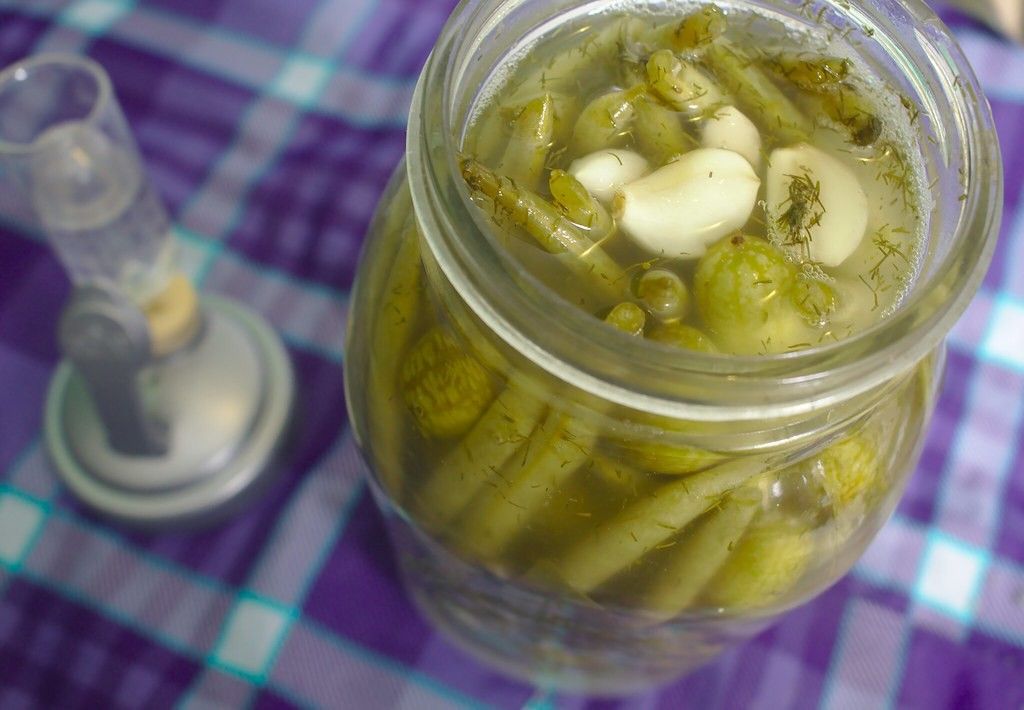
Fermented foods. In a 10-week randomized trial at Stanford, adults who ate about six servings a day of fermented foods (yogurt, kefir, kombucha, kimchi, sauerkraut, fermented vegetables) had more diverse gut microbiomes and lower levels of 19 inflammatory markers by the end. The high-fiber group didn't gain diversity in that time11. Look for refrigerated products labeled "live and active cultures." Shelf-stable pickles and sauerkraut are usually pasteurized, which kills the bacteria.
Many different plants. In the American Gut Project, people who ate more than 30 different kinds of plants a week had more diverse microbiomes than people who ate 10 or fewer12. Fruits, vegetables, whole grains, beans, nuts, seeds, herbs and spices all count. Variety may matter as much as quantity.
More fiber, slowly. Even though fiber didn't raise diversity in the short Stanford trial, it's what gut bacteria eat, and most people need more of it. Add it gradually to avoid gas and bloating.
Antibiotics only when you need them. Don't push for antibiotics for colds or flu, which are caused by viruses. When you do need them, take them as prescribed.
What to skip
- Stool tests sold to consumers. They can list which bacteria were in a sample, but they can't diagnose dysbiosis or tell you what to eat, because nobody has defined what "normal" is1.
- "Leaky gut" cleanses and detox programs. There's no good evidence for them.
- Generic probiotic pills as a cure-all. Some specific strains help with specific problems, such as some kinds of diarrhea. Most products haven't been tested for what they claim, and they rarely settle in your gut for long.
The bottom line
The loss of gut microbial diversity in wealthy countries is real and well documented. The rise of conditions like inflammatory bowel disease is real too. How much the first causes the second is still an open question, because most of the human evidence shows links, not cause and effect. But the things most likely to help, which are more fiber, more kinds of plants, fermented foods, and fewer unnecessary antibiotics, are cheap, safe and good for you anyway.
If you have ongoing gut symptoms such as pain, diarrhea, blood in your stool or weight loss, see a doctor. Those need a real diagnosis, not a microbiome kit.

